














Best Contact Lenses for Dry Eyes: A Buyer's Guide for All-Day Comfort

Reviewed by
Maria Horan FBDO
Overview
The best contact lenses for dry eyes share three things: a silicone hydrogel material, and (ideally) a daily disposable replacement schedule.
Among the brands we stock at SmartBuyGlasses, the strongest dry-eye picks are Dailies Total 1, Acuvue Oasys 1-Day with HydraLuxe, Air Optix plus HydraGlyde, Biofinity Energys and PreciSion 1 Day.
Can you wear contact lenses with dry eyes?
Mild to moderate dry eye is rarely a reason to give up contacts. It’s a reason to choose them more carefully. Newer materials and surface coatings hold moisture in ways that older lenses couldn’t, so what didn’t work for you five years ago may work now.
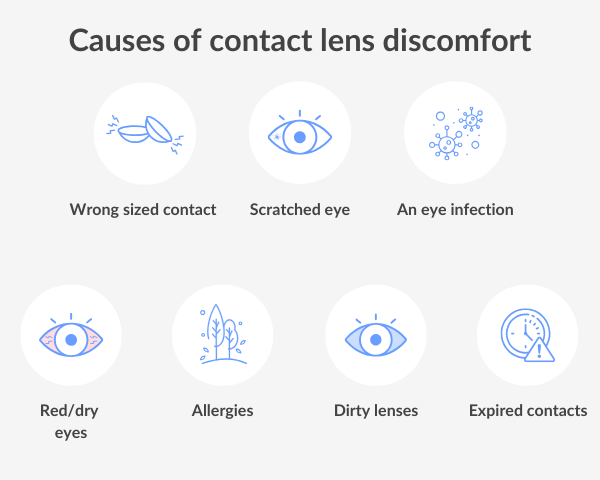
However, if you’re dealing with severe or untreated dry eye disease, lenses can irritate the ocular surface and make symptoms worse. If your eyes burn or sting within minutes of putting lenses in, that’s a signal to see an optician before swapping brands.
Why contact lenses can make dry eyes worse
Understanding the mechanism helps you spot the right fix.
Evaporative dry eye and MGD
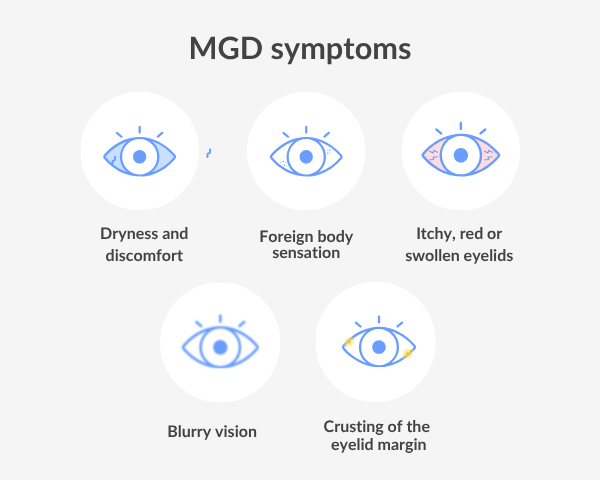
Most adult dry eye isn’t caused by low tear production. It’s caused by evaporation, often linked to meibomian gland dysfunction (MGD). The oily layer of your tear film breaks down, water evaporates faster and your lens ends up sitting on a drier surface.
Environment
Air conditioning, central heating, long flights, windy days and screen-heavy work all speed up tear evaporation. Even a great lens can struggle in a bad environment.
What to look for in the best contact lenses for dry eyes
Silicone hydrogel
Silicone hydrogel transmits more oxygen to the cornea than older hydrogel materials. More oxygen means a healthier cornea and noticeably less of the tired, end-of-day eye feeling many dry-eye wearers know well.
DK/t (oxygen permeability) value
The Dk/t value of a contact lens indicates how easily oxygen passes through the lens material to reach the cornea. In general, a higher Dk/t allows more oxygen transmission, which can support comfort and eye health.
However, oxygen transmission also varies depending on the lens power (prescription strength), as Dk/t values are typically measured around ±3.00 dioptres.
Higher or lower prescriptions may affect oxygen availability differently, meaning the ideal Dk/t depends on both your prescription and wearing schedule.
Daily disposable soft lenses
Recommended for most dry-eye contact lens wearers, these require no cleaning routine, no overnight storage and prevent protein buildup.
Our top contact lens picks for dry eyes
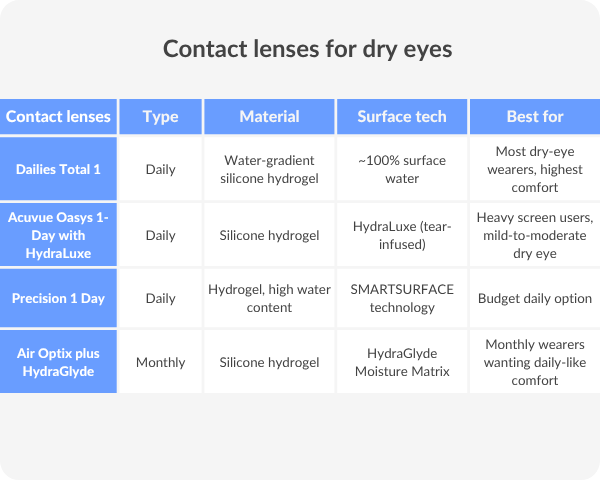
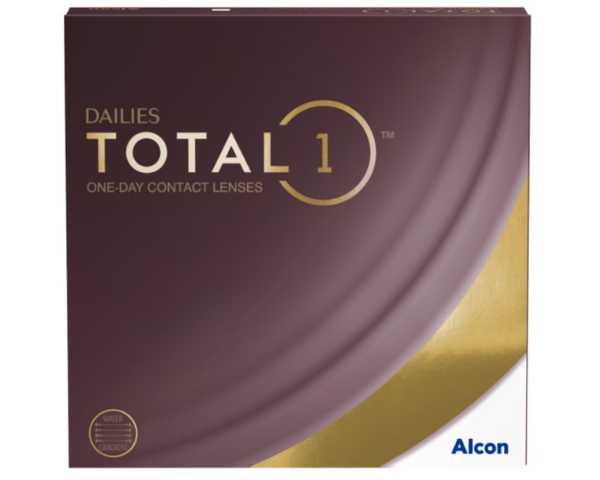
The benchmark for dry-eye comfort. The water-gradient design means the surface touching your eye is close to 100% water, mimicking the eye’s own moisture and cutting friction down to almost nothing.
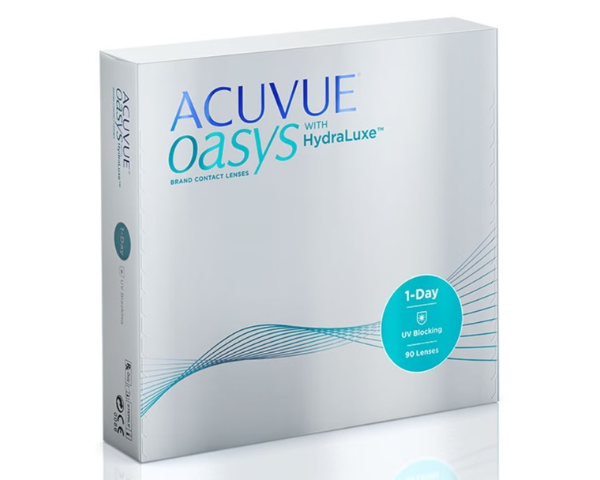
Built around HydraLuxe technology, which integrates tear-like ingredients into the lens material so it works with your own tear film rather than fighting it. A strong daily pick if your dryness is driven by long screen sessions or air-conditioned offices.
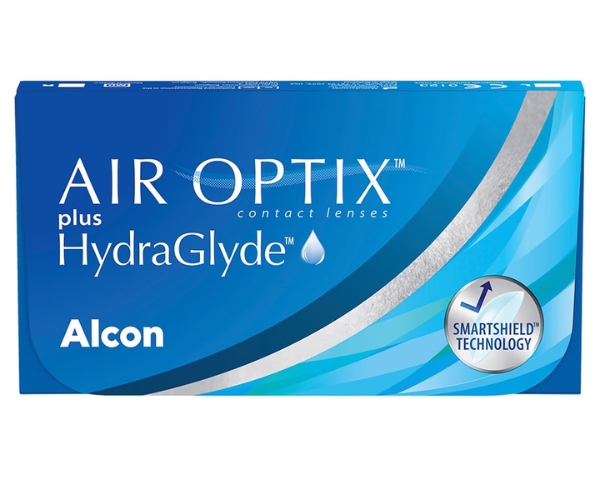
A monthly silicone hydrogel with HydraGlyde Moisture Matrix wetting agent. It also comes in toric (for astigmatism) and multifocal (for presbyopia) versions, which makes it one of the few dry-eye-friendly options that scales across specialised prescriptions.
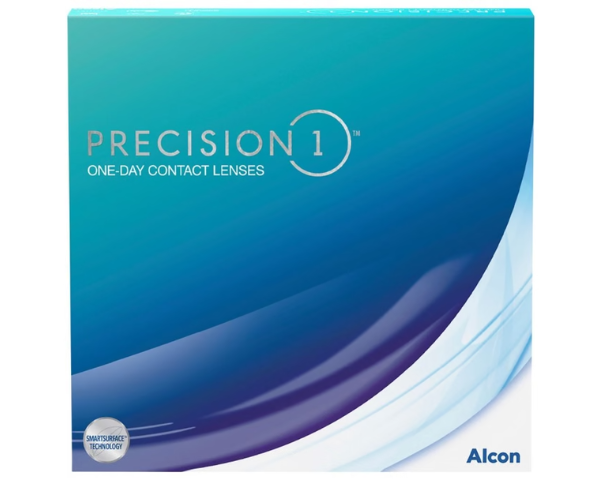
A higher-water-content daily we stock. It uses the SMARTSURFACE® technology to moisture the eye. Smooth surface, comfortable wear, friendlier price than the premium dailies. A good entry point if cost has been keeping you in monthlies.
Dry eyes with astigmatism or presbyopia
Toric (astigmatism) and multifocal (presbyopia) lenses used to mean compromising on moisture, but with new technologies, this is no longer the case.
Air Optix plus HydraGlyde for Astigmatism and Air Optix plus HydraGlyde Multifocal carry the same moisture system into specialised prescriptions.
Acuvue Oasys 1-Day for Astigmatism and Dailies Total 1 Multifocal are strong daily-disposable equivalents.
If you wear toric or progressive lenses and feel dryness by afternoon, ask your optician about switching into one of these.
EXPERT'S TIP!
“Contact lenses are available as progressive lenses, which can help with near vision. For people with a low add, monovision may also be an option, where one eye is corrected for distance vision and the other is corrected for near vision.”
Maria Horan, Dispensing Optician
Daily, weekly, or monthly: which is best for dry eyes?
Daily disposables win for comfort almost every time. A fresh lens every morning means no protein build-up, no solution sensitivity, and no “I should have replaced these last week” guilt.
Two-week and monthly lenses are cheaper per month, but they ask for stricter cleaning, and even with perfect care they accumulate deposits that aggravate dry eye.
If you’re set on monthlies, a silicone hydrogel monthly with a strong moisture coating (Air Optix plus HydraGlyde or Biofinity Energys) is the smart choice.
How to keep contacts comfortable all day
Even the best contact lenses need a bit of help. A handful of small habits make the biggest difference for dry-eye wearers:
- Use lens-compatible rewetting drops. Not every eye drop is safe with contacts in. Look for “for contact lens wearers” or “rewetting drops” on the label. Preservative-free single-use vials are gentlest.
- Blink properly, and often. A few conscious full blinks every minute refresh the tear film. It feels silly until you notice the difference.
- Follow the 20-20-20 rule. Every 20 minutes, look at something 20 feet away for 20 seconds. Your blink rate resets and your focus muscles relax.
- Mind your environment. Direct airflow from vents, fans, or AC units dries lenses fast. A small humidifier helps in dry offices. Wraparound sunglasses cut wind exposure outdoors.
- Don’t push wear times. If your lens is rated for 12 hours, take it out at 12. Pushing to hour 14 is the easiest way to turn a comfortable lens into a dry one.
- Clean and replace on schedule. Monthly means monthly, not “until I remember.” Use fresh solution every time and never top up an old case.
When changing lenses isn't enough
If you’ve tried two or three dry-eye-friendly lenses and you’re still uncomfortable, it might be time to book a proper dry eye assessment with an optician.
Treatments that go beyond lens choice include lid hygiene routines for MGD, warm compresses, prescription dry eye drops and in-clinic procedures.
If you need any additional guidance on choosing the right contact lenses for you, feel free to reach out to our optical experts. They’re here to help.
Frequently asked questions
Which contact lenses are best for dry eyes?
For moderate dry eye, Dailies Total 1 and Acuvue Oasys 1-Day with HydraLuxe are the most commonly recommended daily disposables.
Are silicone hydrogel lenses better for dry eyes?
Generally yes. Silicone hydrogel transmits more oxygen to the cornea than older hydrogel materials, which supports healthier eyes and often improves end-of-day comfort. Most modern dry-eye-friendly lenses are silicone hydrogel.
Why do my contacts make my eyes feel dry?
Reduced blinking, lens deposits, evaporative dry eye, environmental factors and the wrong lens material are the usual suspects.
The fix is often a switch to daily disposables, a silicone hydrogel material, or a lens with a stronger moisture system, sometimes all three.
Can I wear contact lenses every day if I have dry eyes?
Most people with mild-to-moderate dry eye can wear contacts daily, especially in daily disposables. Cap wear time at the lens’s rated hours and give your eyes lens-free days when you can.
Are daily or monthly lenses better for dry eyes?
Daily disposables are usually the more comfortable choice because there’s no deposit build-up between wears. Monthly silicone hydrogels with strong moisture coatings can also work well if you stick to a proper cleaning routine.
Can dry eyes get worse from wearing contacts?
They can, if the lens material, fit, or replacement schedule is wrong, or if you already have undiagnosed meibomian gland dysfunction (MGD) or evaporative dry eye.
Symptoms that worsen with lenses are a reason to see your optician, not a reason to power through.