






Ask an Optician: What Lenses Do I Need for My Prescription?
Reviewed by
Maria Horan FBDO
Overview
Mild prescriptions (up to ±2.00): Standard single-vision lenses work well. You’ll get clear vision with no extra cost.
Moderate prescriptions (±2.00 to ±4.00): Go for thinner, lightweight lenses (index 1.61) to avoid bulky edges.
Strong prescriptions (above ±4.00): High-index lenses (1.67 or 1.74) keep glasses lighter, thinner and more comfortable.
Multifocal needs (distance + reading): Varifocal lenses give you clear vision at all distances without needing to switch glasses.
Expanded guidance
1. Understanding your prescription
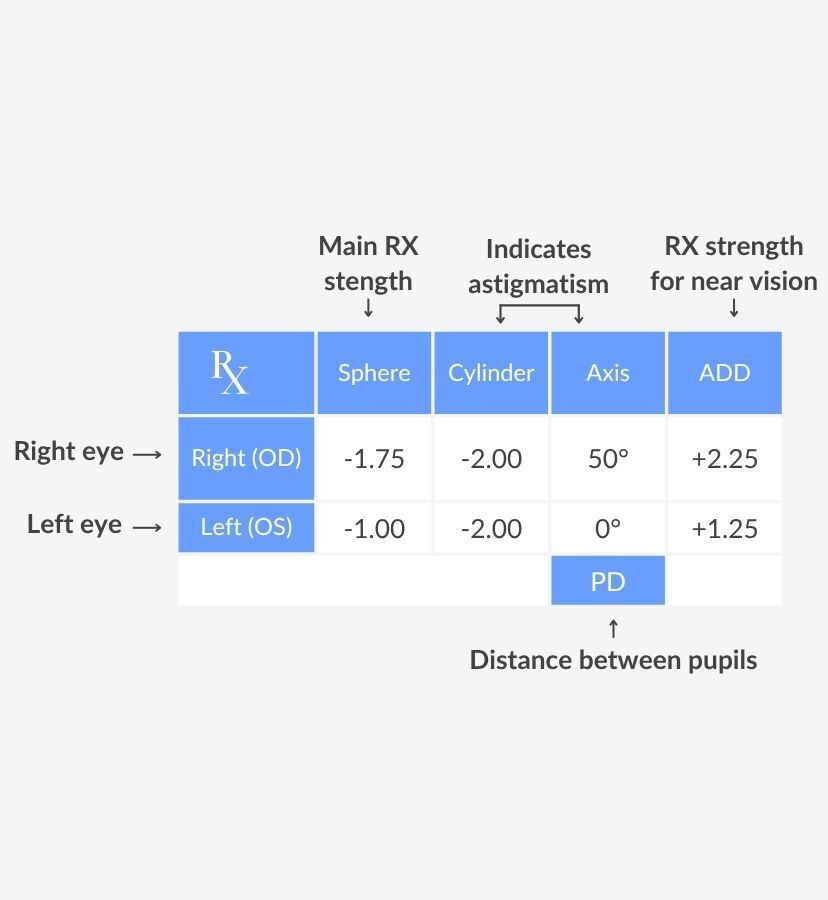
Your eye prescription might look like this:
Each part of your prescription gives insight into the lenses that will suit you best:
- SPH (Sphere): Indicates the strength of your prescription and helps guide lens thickness.
- CYL (Cylinder): Shows if you have astigmatism, which may benefit from thinner lenses.
- ADD: Provides extra power for near vision and suggests you may need varifocal.
In rare cases, the prescription may contain a “prism” indicator, which is when the eyes don’t work together, causing double vision. If a prism indicator is present, the optician will include the direction for the position of the prism “base.”
Need additional guidance? Read our complete guide on understanding your prescription here.
Once you understand your numbers, the next step is to select frames that fit your style and meet your prescription needs.
2. Lens types explained
When choosing prescription glasses, understanding the different types of prescription lenses available is key to achieving the best vision correction for your needs.
3. Understanding lens index
The lens index (refractive index) determines how thick or thin your lenses will be. The higher the index, the thinner the lens for the same prescription strength. This is especially helpful if you want lightweight glasses that look good in your chosen frames.
EXPERT'S TIP!
“If your prescription is above -4.00 or +4.00, always consider a high-index lens. It won’t just look thinner—it will also feel lighter on your face and fit better in modern frames”.
Maria Horan, Dispensing Optician
4. Understanding lens materials
The lens material you choose can make a big difference in how your glasses feel and perform throughout the day.
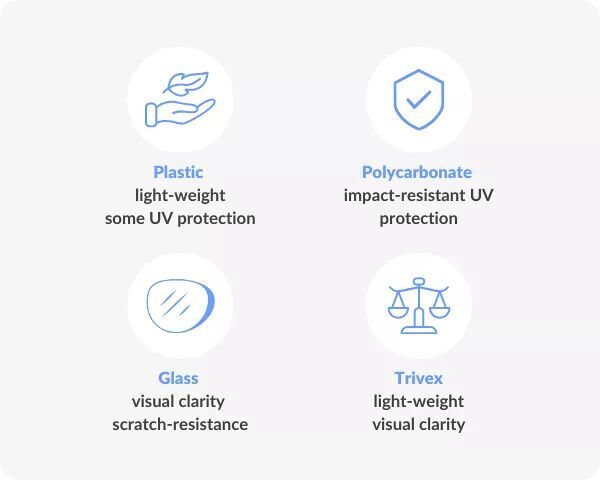
Certain lens materials are ideal for active lifestyles due to their durability, while others offer ultra-light comfort for all-day wear. Choosing the right material depends on your lifestyle and visual needs.
These are the most common options:
5. Understanding coatings and add-ons
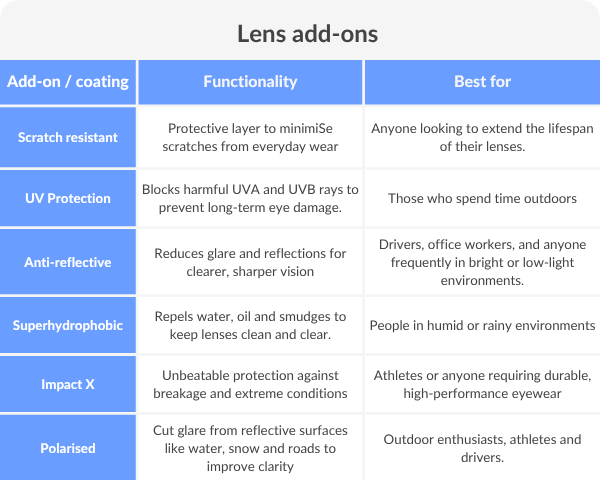
Lenses do more than correct your vision. your vision.” The right add-ons, from scratch resistant to our unbeatable Impact X coating, can also solve everyday pain points and improve overall comfort.
Here are the main ones to consider:
Get personalised advice
Choosing the right lenses doesn’t have to be complicated. What matters most is finding a solution that fits both your prescription and your lifestyle.
If you need additional information on lens types, materials and coatings we offer, you can visit our Lens Hub to compare your options side by side. Or, reach out to our certified optical experts for personalised advice.
Your eye health should be taken seriously, and we’re here to help you find the best solution for your needs.