



















How to Get Dust Out of Your Eye

Reviewed by
Maria Horan FBDO
Have you ever experienced a burning or itchy sensation in your eyes that makes you stop whatever you’re doing?
This common experience is not only disruptive but can cause damage to the eyes if not taken care of properly.
Here we will discuss some of the essential steps to remove a foreign body from your eye. While this can be taken care of at home, professional medical care may be required for more severe situations.
How does dust get in the eye?
There are many ways dust can get in the eye, including:
- Airborne particles: wind carries tiny dust particles that can land in your eye
- Touching your face: rubbing your eyes can transfer dust from your hands directly
- Environmental exposure: being in dry, dusty and sandy places can increase the chances of getting foreign objects in your eye, such as construction sites, the beach and when cleaning.
Once in the eye, dust and debris can irritate the surface and sometimes get trapped under the eyelid, making it feel scratchy or uncomfortable.

While a common first reaction to this is rubbing the eyes until the feeling goes away, this can scratch the cornea or cause bacteria to spread.
Let’s take a look at the proper ways to respond to getting dust in the eye.
First step: inspect your eye
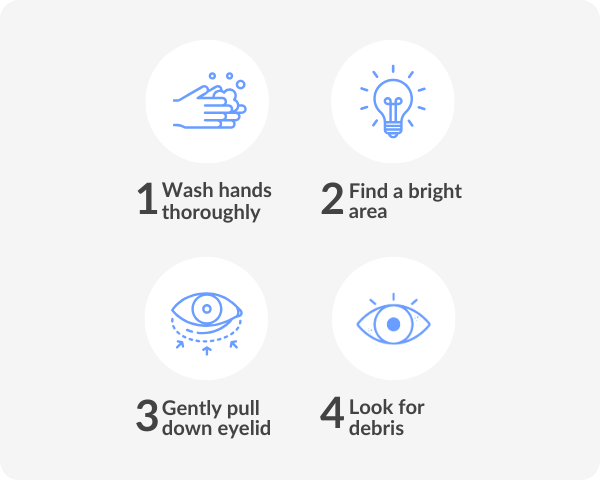
The first thing you need to do before trying to remove any particles from your eye is identify where and what they are.
- Wash your hands thoroughly with soap and warm water. This helps prevent the spread of bacteria and reduces the risk of infection.
- Find a well-lit area and position yourself in front of the mirror. Use a lamp or flashlight in needed for better visibility
- Gently pull your lower lid and upper lid, as well as the inner corner, to get a full view of your eye.
- Examine your eye carefully in a mirror. Look for any foreign objects, such as dust, dirt, or eyelashes, that may be stuck on the surface of your eye or under your eyelid.
If you’re unable to find the foreign object, it’s best to consult an eye doctor. The uncomfortable sensation could indicate something else, such as dry eyes, conjunctivitis or a scratched cornea.
If that is not the case and you identified the object, let’s look at a few options to remove it.
Option 1: Blinking
It may seem simple, but blinking may be the safest and quickest way to remove a foreign object from your eye.
When we blink, our eyelids close and cover the surface of the eyeball. This motion creates a cleaning mechanism, which naturally removes dust from the eyes.
The eyelids act like a windshield wiper, sweeping across the eye to remove foreign objects.
The process of blinking also stimulates your eye to produce tears, which are crucial for good eye health. Tears and eye drops help lubricate the eyes, keeping them moist and preventing dryness.
They also contain enzymes and proteins that help fight off infections and remove any harmful particles that may have entered.
Option 2: Flush it
If blinking doesn’t remove the debris, it may be time to try to flush out the affected eye.
This can be done with distilled water or saline.
Saline solution is made up of a specific concentration of salt and water, similar to the natural tears produced by your eyes. It is generally safe to use for eye irrigation.
Here’s how you can do it:
- Fill a sterilised cup or container with saline or distilled water
- Lean your head over a sink or basin.
- Open and close your eye while pouring the saline or distilled water over it in a gentle stream.
- Continue this process until the particle is thoroughly flushed out.
Keep in mind that it is not recommended to flush your eyes with tap water, as it may contain harmful impurities or microorganisms that could cause an eye infection or other eye problems.
Option 3: Use a wet washcloth or cotton swab
If flushing your eye out becomes too uncomfortable, another option is to use a washcloth to gently wipe the eyelid until the debris comes out.
- First, ensure that you wash your hands thoroughly before touching your eye. This is crucial to prevent any further irritation or infection.
- Wet the washcloth with warm water and wring out any excess moisture.
- Place the washcloth or clean cotton swab gently over your eye and blink a few times. This gentle move will allow the water to wash away the dust particles.
- Repeat the process until the particle is removed from your eye.

Remember to use a clean washcloth or a new cotton swab each time you repeat the process.
DID YOU KNOW?
Your tears act as a natural cleaner for dust and debris. However, sometimes your eyes need extra help to get rid of particles; you can use saline or clean distilled water to do so.
Important things to keep in mind
These steps may be simple, but it’s always wise to take extra care and proceed with caution when it comes to eye health.
If you got chemicals in your eyes
If you get chemicals in your eye, it’s crucial to act quickly to minimise the potential damage.
It helps to safely flush your eye, as outlined above, to dilute the chemical liquid. If you wear contact lenses, remove them as soon as possible, as they can trap harmful liquid inside the eye.
Even if you think the chemical is gone, we recommend contacting a doctor, as they will be able to assess the extent of the damage and provide appropriate treatment.
If you got metal or wood in your eyes
Whether the object is glued into the eye or buried in the tissue under the eye’s surface, you should go straight to the emergency room if you get metal or wood in your eyes.
If something is embedded in your eye, dealing with it at home is dangerous.
If you work in an environment where eye injury is more likely to happen, protect your eyes at all times by wearing the correct eyewear. Protective goggles can minimise the chances of hazards entering your eyes and causing long-lasting trauma.
Whatever the situation may be, do not use your fingers or any sharp objects, such as tweezers, to remove the object in your eye. This can cause contamination or further eye injuries.
When should you seek medical attention?
If the foreign substance is severe and you’re unable to get it out using the above methods, you should seek medical attention.
An eye doctor can determine the cause of the problem and prescribe proper medication or treatment to alleviate the itching sensation and prevent infection.
Removing dust or particles from your eye is a task that needs to be done safely and correctly. Left unattended, it can lead to abnormal vision, pain or even vision loss.
Consult an eye doctor or go to an emergency room as soon as possible if:
Your eye bleeds
You are unable to close your eyes
Your vision has changed
You got harsh chemicals in your eye
You got something sharp in your eye, such as wood or metal

Can dust in your eye cause permanent damage?
Dust particles in your eye can cause irritation, redness, and discomfort.
However, in most cases, they do not cause permanent damage. The eye has a natural mechanism to remove foreign particles.
However, certain types of debris, such as glass, chemicals, metal or wood, can be more dangerous and require immediate first aid.
Knowing the correct steps to take when this happens is a great start.
When it comes to eye health, the more you know, the better prepared you are, so put your mind at ease with more tips and helpful advice by visiting our Optical Centre or reaching out to our certified opticians.